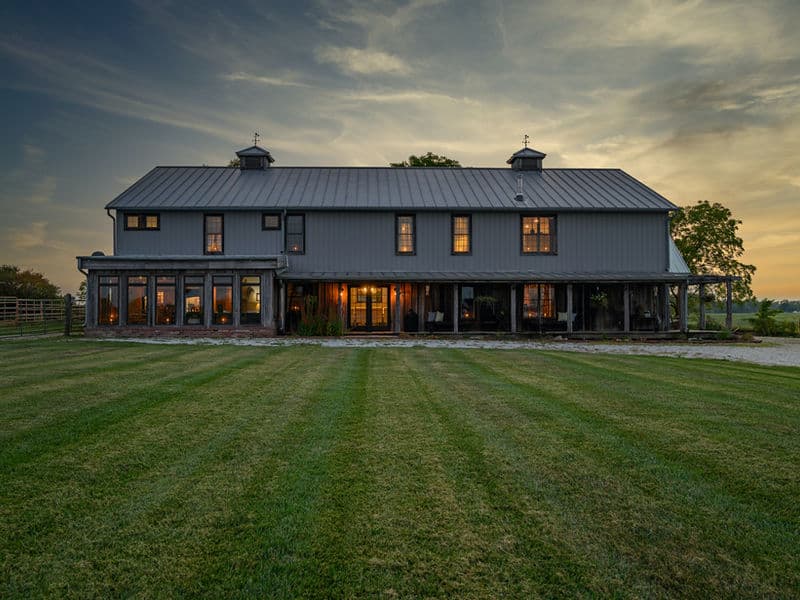


If you are reading this, you are probably shopping for a steel building. Maybe you need a workshop, a barn, a garage, a commercial space, a church, a place to store equipment, or a fully custom layout that does not fit neatly into any of those categories. Whatever the reason, you have probably already discovered that the steel building industry is confusing. Every company claims to sell the best product at the best price. Brochures look the same. Websites use the same stock photos. Sales reps promise the moon.
This steel building buyer’s guide is different. We are going to walk through every important aspect of buying a steel building, and we are going to be honest about what matters and what does not. Some of what follows might contradict what a sales rep told you. That is fine. You should make your purchase decision based on facts, not pressure. If you want a straight answer about what you need for your specific project, call us at (888) 460-9294. We will tell you what makes sense, even if it is not the most expensive option.
Framing systems: The Foundation Of Your Steel Building Buyer’s Guide
Every steel building starts with a frame. The frame is what holds the building up, transfers loads to the foundation, and determines how the building will perform over its lifetime. Understanding steel building types starts here, because there are three main framing systems you will encounter, and the difference is the single most important thing you can do before buying.
Solid-frame construction uses formed steel sections — not hollow tubing — as the primary structural members, connected with structural bolts through pre-punched holes instead of brackets and screws. There are two solid-frame types, and then there is the other category entirely: hollow tube-frame.
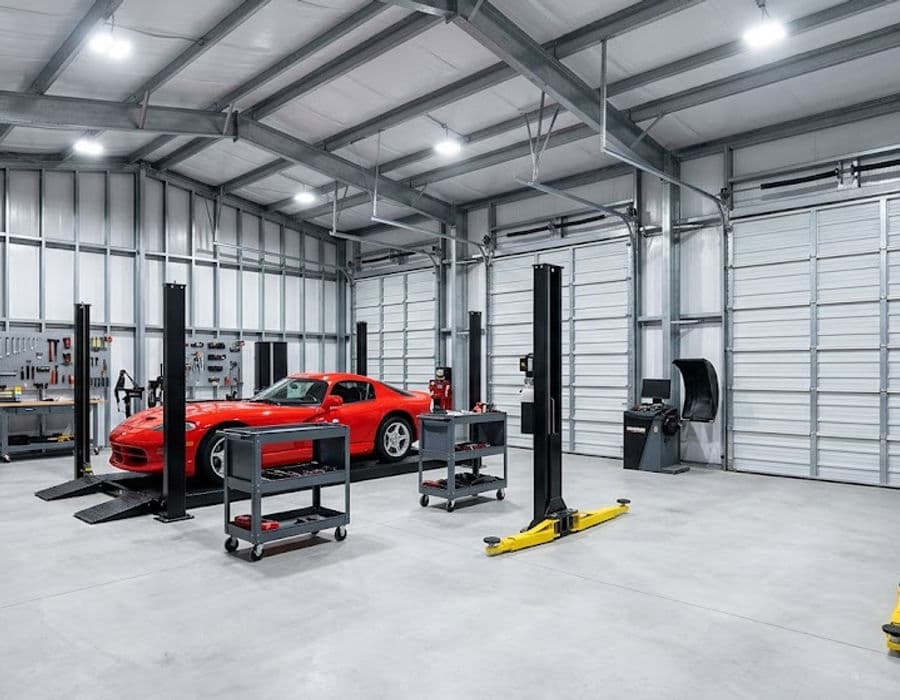
C-channel (cold-formed steel sections) is the lighter solid-frame type, designed for residential and light commercial applications: garages, workshops, barns, barndominiums, and sanctuary shells. It can span up to 40 feet without interior columns, can be engineered for 130 mph wind loads and 30+ psf snow loads, and can be insulated and conditioned. If you are a homeowner buying a building to last decades, this is probably what you want.
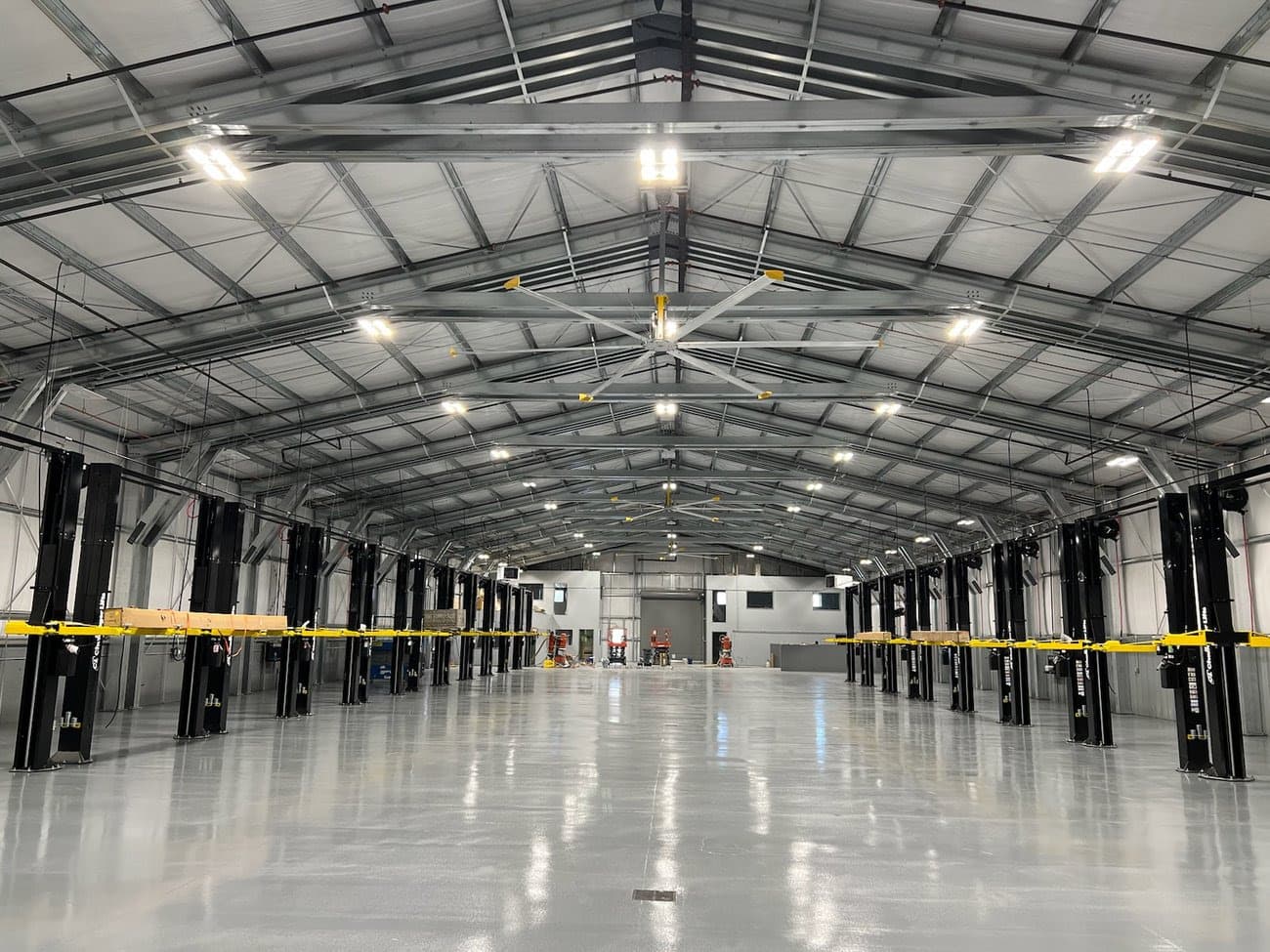
I-beam rigid-frame is the heavier solid-frame type — heavy steel I-beams as the primary framing members, fabricated to specific engineering requirements and bolted together at the site. This is the type of construction used for commercial buildings, aircraft hangars, large warehouses, and heavy agricultural buildings. An I-beam building can span up to 100 feet without interior columns and can be engineered for wind loads of 150 mph or higher. If you need a large commercial structure, I-beam is the right choice. For most residential buyers, it is more building than you need and more expensive than you need to spend.
Tube-frame buildings are the other framing category — not solid-frame at all. They use square or rectangular hollow steel tubing for the framing. These are lighter, cheaper, and easier to assemble. They work fine for small carports, storage shelters, and basic shelters in mild climates. But they are not in the same category as C-channel or I-beam buildings for structural performance, clear span capacity, or longevity. Tube-frame buildings are typically rated for 90 to 110 mph wind and 10 to 20 psf snow, which may not meet building code in many locations. We compare solid-frame and tube-frame in detail in our solid frame vs. tube frame article if you want the full breakdown.
Here is a quick comparison to help you understand which framing type fits your project:
C-channel (solid-frame). Spans up to 40 feet without interior columns and can be engineered up to 130 mph wind and 30+ psf snow load. Best for residential and light commercial uses, including garages, workshops, barns, and barndominiums.
I-beam rigid-frame (solid-frame). Spans up to 100 feet without interior columns and can be engineered for 150 mph+ wind. Best for large commercial structures, aircraft hangars, large warehouses, and heavy agricultural buildings.
Tube-frame (hollow-frame). Rated for 90 to 110 mph wind and 10 to 20 psf snow. Best for small carports, storage shelters, and basic shelters in mild climates.
The short version: if you are a homeowner or small business owner who wants a building to last decades, C-channel is the sweet spot of performance and value. If you need a large commercial clear span, I-beam is the answer — both are solid-frame. If you just need a carport to keep the hail off your truck, tube-frame will do the job for less money.
Engineering: The Part Most Buyers Skip
Here is something most buyers do not understand: a steel building is an engineered structure. That means someone, somewhere, ran calculations to determine what size framing members, what gauge secondary framing, and what connection details are needed for a specific set of wind, snow, and seismic loads. Our California state page is a good example of how far that can go — a real Seismic Design Category layered on top of wind and snow, in one of the most demanding code environments in the country.
Those loads matter. A building engineered for 90 mph wind loads is not the same as a building engineered for 150 mph wind loads, even if they look identical from the outside. The difference is in the steel. More wind load means heavier primary framing, more secondary framing, stronger connections, and a deeper foundation.
When you get a quote, ask what wind load and snow load the building is engineered for. If the sales rep cannot answer immediately, that is a problem. If the answer is “standard” or “code minimum” without a specific number, that is also a problem. You want specific numbers: 115 mph wind, 30 psf snow load, exposure category C, for example. Get it in writing.
Your local building department will have required load minimums based on your location. If your building is not engineered to meet or exceed those minimums, you will not get a permit. Or worse, you will get a permit for a building that is under-engineered for actual conditions. For a deeper dive on how to compare the engineering specs across quotes, our quote comparison guide walks through it line by line.
Coatings: The Invisible Difference
Steel rusts. That is just physics. The question is how fast, and what is protecting it.
The best coating system for steel framing and panels is Galvalume. Galvalume is a coating made of aluminum and zinc applied to the steel surface in a continuous hot-dip process. The aluminum provides a barrier against corrosion, and the zinc provides galvanic protection at cut edges and scratches. Galvalume-coated steel has a service life that can exceed 50 years in most environments.
Galvalume comes in different coating weights. AZ55 is the standard for exterior panels and roofing. AZ50 is sometimes used for interior panels. The “AZ” stands for aluminum-zinc, and the number refers to the coating weight. Higher is better for corrosion resistance. We explain the full technical story in our Galvalume AZ55 article if you want to understand why it matters, especially in coastal or humid climates.
Some manufacturers use painted steel or powder-coated steel instead of Galvalume. Paint looks good when it is new, but it does not provide galvanic protection. Once paint chips or scratches, the exposed steel corrodes. In coastal areas or humid climates, painted steel without a Galvalume substrate will start showing rust within a few years.
Ask your supplier what coating system is used on the primary framing, secondary framing, and wall and roof panels. If they say “painted” or “powder-coated” without mentioning Galvalume, ask specifically about the substrate. A lot of cheap buildings use painted steel over bare metal. That is a building that will look bad in five years and have structural issues in ten.
Warranties: Read The Fine Print
Almost every steel building comes with some kind of warranty. The question is what the steel building warranty actually covers.
A meaningful warranty covers the structural framing and the panel coating for a specific period. The best warranties in the industry cover Galvalume-coated panels for 25 to 40 years against perforation due to corrosion. Structural framing warranties typically run 10 to 25 years.
But warranties have exclusions, and the exclusions are where companies hide. Common exclusions include damage from improper installation, damage from modification, corrosion from chemical exposure, and “normal weathering.” Some warranties are prorated, meaning the coverage decreases over time. Some require you to maintain the building according to a specific schedule or the warranty is void.
Ask for a copy of the warranty before you buy. Read it. If the warranty is one page with no exclusions, it is probably worthless because it means the company can decide what is covered after the fact. A good warranty is specific about what is covered, what is excluded, and how to make a claim. For a complete list of warranty questions to ask, our 25 Questions article has you covered.
Pricing: Why The Cheapest Quote Is Usually The Worst Deal
Steel building prices vary widely for the same nominal size. A 40x60 building can be quoted as a light-gauge tube-frame structure at the low end or an engineered solid-frame building at the high end, depending on the framing type, engineering, materials, and included accessories. That spread is the whole problem: they are not the same product. A Northcraft 40x60 C-channel building starts at $27,800 delivered, with stamped engineered drawings, all building components and freight included. The cheapest quote is almost always the one with the most compromises.
Lower prices come from somewhere. Maybe the building uses lighter gauge secondary framing. Maybe the panels are painted steel instead of Galvalume. Maybe the wind load is 90 mph instead of 130 mph. Maybe the warranty is shorter or has more exclusions. Maybe the accessories (doors, windows, insulation) are not included in the base price.
When you compare quotes, compare them line by line. Look at the gauge of the secondary framing, the coating system on the panels, the wind and snow loads, the included accessories, and the warranty terms. Two buildings that look the same on paper can be vastly different in quality and longevity. For a detailed breakdown of what drives pricing, our Steel Building Cost article covers every factor.
This is why we publish our specs instead of burying them. If a supplier will not tell you the coating weight, the framing gauge, or the wind load, call us at (888) 460-9294. We will give you a straight answer, even if you end up buying from someone else.
Permits: Do Not Skip This Step
Every jurisdiction has building codes, and most require steel building permits for structures above a certain size. The permit process exists to make sure your building is safe and meets minimum engineering requirements for your location.
If your building supplier tells you that permits are not necessary or that you can “just put it up,” be careful. If you build without a permit and your local code enforcement finds out, you may have to remove the building, pay fines, or retrofit it to meet code. If the building is damaged in a storm and it was not permitted or was under-engineered, your insurance company may deny the claim.
Get the permit. It is not optional. Your building supplier should be able to provide the engineering documents your building department needs: stamped drawings, load calculations, and foundation plans. If they cannot, find a different supplier.
Installation: Who Is Putting Up Your Building
A well-engineered building installed poorly will perform worse than a mediocre building installed correctly. Installation matters.
Steel buildings go up in one of three ways. You can hire a professional erector, you can do it yourself, or the supplier can provide installation as part of the package. Each option has trade-offs.
Professional erectors know what they are doing. They have the equipment, the crew, and the experience. They will get your building up in days instead of weeks, and they will catch problems early. The downside is cost. A professional crew adds a real line item to your project, priced by the building size and complexity.
DIY installation can work for smaller C-channel buildings if you have the skills, the tools, and a few friends. C-channel buildings are designed for bolt-together assembly, and the supplier provides instructions. A 30x40 C-channel building is a realistic DIY project. A 50x50 I-beam building is not. You need a crane for I-beam erection, and the beams can weigh 500 to 1,000 pounds each.
Some suppliers offer erecting as a package. This can be convenient, but ask who the actual installers are. Are they employees of the manufacturer, or are they subcontracted? Are they licensed and insured? What happens if there is a problem after installation? Northcraft’s own turnkey option works this way for buyers who would rather have engineering, foundation, and erection coordinated as one project instead of three separate ones.
Accessories: What is Included and What Costs Extra
Doors, windows, insulation, vents, skylights, gutters, and interior finishes are all accessories. Some are included in the base quote, and some are add-ons.
This is where a lot of buyers get surprised. They see a great price, sign the contract, and then discover that walk doors, windows, and insulation are extra. By the time they add everything they need, the price has gone up 30%.
When you get a quote, ask for a complete list of what is included and what is not. If you need insulation, ask what R-value and what type. If you need large doors for equipment access, ask about the door type, size, and whether the framing around the door is reinforced. If you need ventilation, ask about vents, fans, and ridge ventilation.
How Long Will Your Building Last?
A well-built steel building should last 40 to 60 years. But that number depends on the framing type, the coating system, the engineering, and how well you maintain it. A tube-frame building with painted panels might need panel replacement in 10 to 15 years. A solid-frame building with Galvalume-coated panels could still look good at 40. We break down every factor that determines lifespan in our how long do steel buildings last article.
Making Your Decision: What To Look For When Buying A Steel Building
Buying a steel building is a significant investment. You are going to live with this building for decades, so take the time to get it right. This steel building buyer’s guide would not be complete without our advice in plain terms. Think of it as the reference you come back to as you move through the buying process.
Get at least three quotes. Compare them line by line, not just by total price. Ask about engineering, coatings, warranties, and what is included. Talk to the local building department before you buy so you know what loads your building needs to meet. Read the warranty. Visit a building the supplier has already erected if you can, and look at it closely. Check the panel coating, the framing connections, and how the building has held up. Any steel building buyer’s guide worth reading tells you the same thing: the specs matter more than the sticker price.
If a sales rep pressures you to sign today because of a “special price” that expires tomorrow, walk away. Reputable suppliers do not need high-pressure tactics. Their buildings sell themselves. That is how to choose a steel building supplier: by how they handle your questions.
A steel building is a 40-year decision. Get the specs, the warranty, and the price in writing before you sign anything. Call Northcraft Steel at (888) 460-9294 or email estimating@northcraftsteel.com. We will send you a real breakdown, not a brochure. If a cheaper building makes sense for you, we will say so. That is the only way we know how to do business.