
We get this question every week. Someone calls and says they are looking at two buildings that look about the same in the photos, but one costs noticeably less than the other. They want to know why.
The answer is almost always the same: one is a tube-frame building and the other is a solid-frame building. They are not the same product, they are not built the same way, and they do not perform the same over time. But because they look similar in a brochure and serve similar purposes, buyers compare them side by side and pick the cheaper one.
That is usually a mistake. If you want help figuring out which type makes sense for your project, call us at (888) 460-9294. Here is why.
What is a tube-frame building?
Tube-frame buildings use square or rectangular hollow steel tubing as the structural frame. The tubing is typically 14-gauge to 20-gauge, with sizes ranging from 2x2 inches up to 4x4 inches depending on the building dimensions. The frame is assembled using brackets and self-tapping screws, and the panels are attached to the outside.
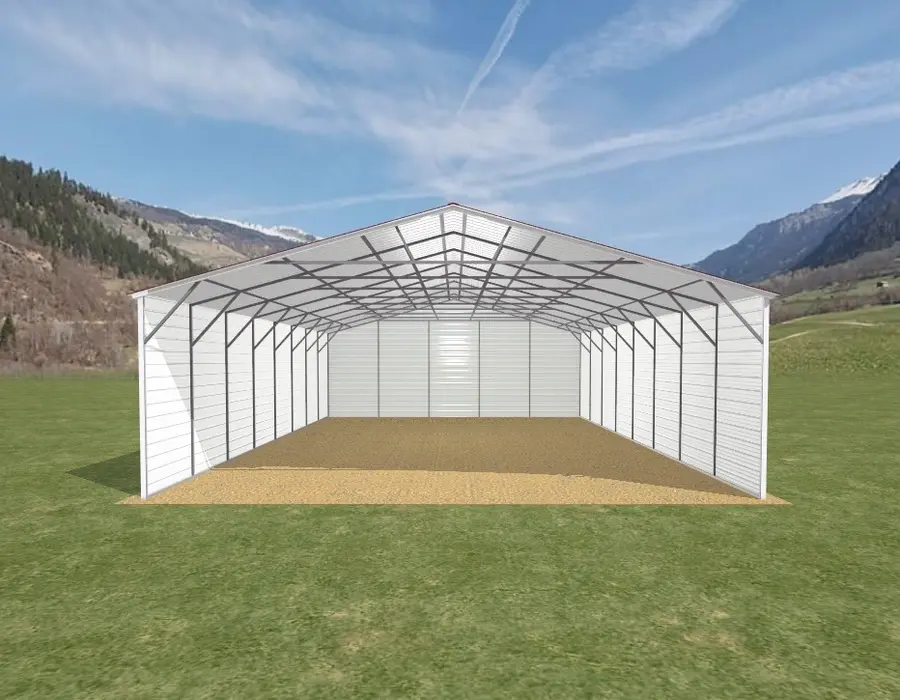
These buildings go by several names: tube steel buildings, square tube buildings, prefab carports, and sometimes “portable buildings.” You have probably seen them advertised as cheap 20x20 metal garages or 30x40 carports at a fraction of what a solid-frame building of the same footprint costs. Those are tube-frame buildings.
Most of the companies that sell these tube steel buildings typically have some sort of low-grade “Designer” located somewhere on their site that allows you to design your building. However, permanent steel buildings that are custom engineered for your specific state and site to meet or exceed your local building codes are designed on a software called “Metal Building System” (“MBS”), which is the software that structural engineers use to design and create stamped building drawings. So, if you see one of those generic “Designer” features on a company’s website, there’s a good chance that company offers those light weight tube steel buildings.
Tube-frame buildings are not inherently bad. They have a real place in the market. If you need a carport to protect your truck from hail, a small storage shed for lawn equipment, or a basic shelter for livestock, a tube-frame building can do the job for not a lot of money. The problem is when buyers purchase a tube-frame building expecting solid-frame performance.
What Is A Solid-Frame Building?
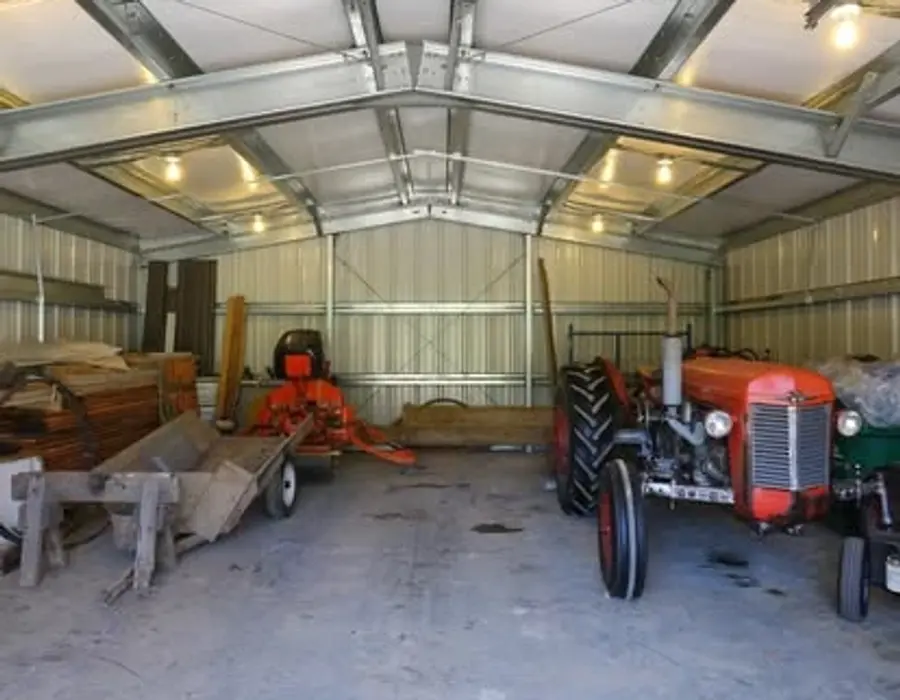
Solid-frame buildings use formed steel sections as the primary structural members. Unlike tube steel, which is hollow, a solid-frame member is a solid piece of steel formed into an open cross-section. The open shape is stronger and more rigid than a hollow tube of the same weight, and the thicker material (typically 12-gauge to 14-gauge, and up to 10-gauge on Northcraft’s own C-channel line) gives it more structural capacity.
Solid-frame buildings are bolted together, not screwed. The connections use structural bolts through pre-punched holes, which creates a rigid, permanent connection. The frame does not rely on brackets and screws for its structural integrity. That is the difference between a solid frame and a tube frame: the connections and the member type.
Solid-frame buildings can span wider than tube-frame buildings (40 feet and up depending on the design), can be engineered for higher wind and snow loads, and can be insulated and conditioned because the framing is heavy enough to support insulation and interior finishes. They are the building you want if you are putting up a workshop or garage, a barn, a barndominium, or a column-free sanctuary that needs to last decades.
There are two solid-frame types: C-channel (cold-formed steel, the common residential and light-commercial option) and I-beam (heavy hot-rolled structural steel, used for large commercial structures like warehouses and aircraft hangars). Both are solid-frame — the real dividing line is solid steel versus hollow tube, not C-channel versus I-beam. This article focuses on C-channel, since it is the direct price and market comparison to tube-frame: both serve residential and light-commercial buyers. I-beam is heavier-duty and more expensive, and it is covered separately below and in our Steel Building Buyer’s Guide.
For the full framing breakdown across all three types, see our Steel Building Buyer’s Guide.
Solid Frame vs Tube Frame: The Structural Differences That Matter
This is the part most buyers do not think about, and it is the most important structural difference between the two types.
A tube is hollow. That means the walls of the tube are the only steel carrying the load. If the wall is 16-gauge (about 0.06 inches thick), that is all the steel between the inside and outside of the member. A solid-frame member is solid steel in cross-section. The web (the vertical part) and the flanges (the horizontal parts) are continuous, and the gauge is typically heavier. At 12-gauge, you are looking at about 0.105 inches of steel in the web.
The difference shows up in three ways:
Bending strength: A solid-frame member has a higher section modulus than a comparable tube because the steel is distributed more efficiently. That means it can carry more bending load for the same weight of steel. A solid-frame building will resist wind and snow loads better than a tube-frame building with tubing of similar weight.
Corrosion: This is the big one. A hollow tube is closed. If moisture gets inside the tube (and it will, through screw holes, bracket holes, and the open ends), it stays there. The inside of a tube is not coated. It is bare steel. Over time, the tube corrodes from the inside out, and you cannot see it happening. By the time rust appears on the outside, the tube may have lost significant wall thickness. A solid-frame member is open. Moisture does not get trapped inside because there is no inside. Both sides of the steel are exposed to air and can be coated. If the coating is maintained, the steel is protected.
Connections: Tube-frame buildings connect members with brackets and self-tapping screws. The screws go through the tube wall, which is thin. Over time, thermal cycling and wind vibration can enlarge the screw holes, and the connections work loose. Solid-frame buildings connect members with structural bolts through pre-punched holes in heavier steel. The connection is more rigid and stays tight longer.
The Structural Differences In Detail
Let us get specific about what separates these two steel framing types.
Primary Framing: A solid-frame building uses formed steel sections that are 4 to 8 inches deep, depending on the span and load. A tube-frame building uses tubing that is 2 to 4 inches across. The solid-frame member has significantly more section modulus, which means it can carry more load for the same weight. This is not a subtle difference.
Connections: Solid-frame buildings use bolted connections through pre-punched holes. The bolts are structural grade and tightened to spec. Tube-frame buildings use bracket connections with self-tapping screws. The screws are not structural bolts. The steel building connections determine how the frame handles lateral loads and how long it stays tight.
Clear Span: A solid-frame building can span up to 40 feet with C-channel, up to 100 feet with I-beam, without interior columns. A tube-frame building is typically limited to about 24 feet of clear span. Beyond that, the tubing is not strong enough to support the roof load without intermediate posts. If you need a wide open interior, tube frame will not get you there.
Foundation: Solid-frame buildings require a concrete foundation with anchor bolts or a ground-mounted foundation system designed for the loads. The foundation is part of the structural system. Tube-frame buildings can be anchored to a concrete slab, but they can also sit on the ground with ground anchors or even concrete blocks. That should tell you something about the loads they are designed to carry.
Wind and Snow Ratings: Solid-frame buildings can be engineered for 130 mph wind and 30+ psf snow loads. Tube-frame buildings are typically rated for 90 to 110 mph wind and 10 to 20 psf snow. If you live in a wind zone or a heavy snow area, a tube-frame building may not meet your local building code. For a full breakdown of how engineering specs affect pricing, see Our Steel Building Cost article.
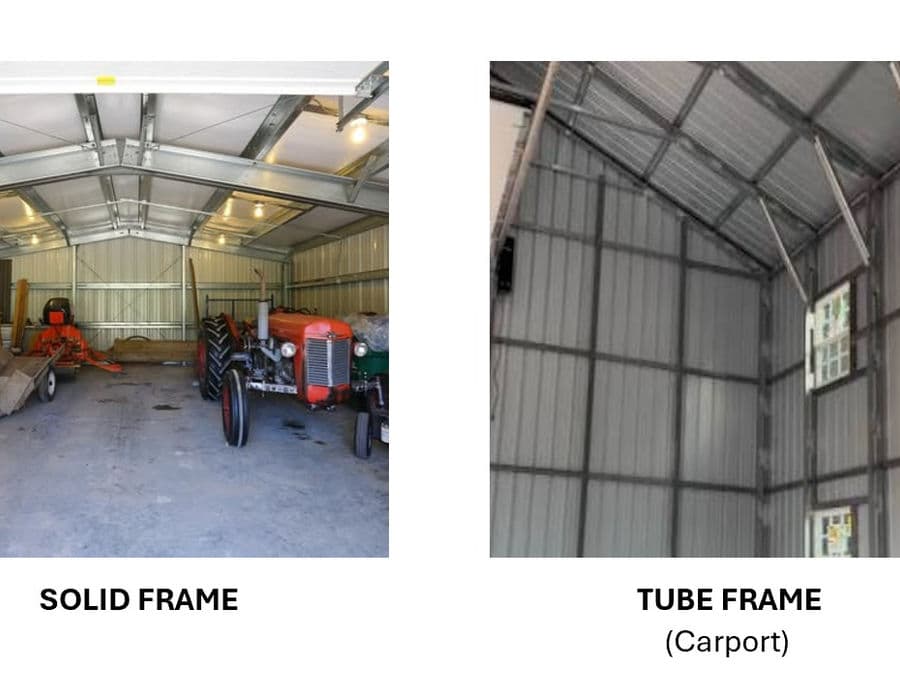
Solid-Frame vs. Tube-Frame At A Glance
Pricing: The Real Comparison
Here is where the solid frame vs tube frame question gets interesting, and here is why solid-frame buildings are the right comparison to tube-frame buildings.
An I-beam rigid-frame building (commercial grade) is much more expensive than a tube-frame building. Nobody compares them because the price gap is too wide. They are clearly different products for different buyers.
A C-channel building is closer in price to a tube-frame building than an I-beam building is. Compare carefully: confirm whether any quote you're comparing includes erection. Northcraft’s starting price covers the building package; erection is priced separately and available on request. The gap in the buildings themselves is wider than the two prices make it look once you are comparing the same scope on both sides.
The question is whether the extra money is worth it. Here is what it buys:
A building that can be engineered for higher wind and snow loads, which means it will meet building code in more locations and survive more severe weather
A building with bolted structural connections instead of screwed bracket connections, which means the frame stays tight and rigid over time
A building with solid steel members instead of hollow tubes, which means no trapped moisture and no hidden interior corrosion
A building that can be insulated and conditioned, because the framing is heavy enough to support insulation and interior finishes
A building with a clear span up to 40 feet with C-channel, up to 100 feet with I-beam, instead of being limited to 24 feet
A building backed by a real structural warranty, instead of a thin warranty or no warranty at all
If you are building a carport to park a tractor under and you do not care about 30 years from now, the tube-frame building is the right choice. If you are building a garage, a workshop, a barn, or any structure you want to last and potentially insulate, the solid-frame building is worth the extra money. Which steel frame is better for residential depends on whether you need performance or just shelter.
Lifespan and Durability
A well-maintained solid-frame building with Galvalume-coated panels will last 40 to 50 years. The structural members are solid steel, and with proper coating, corrosion is a slow process. The bolted connections stay tight. The frame does not shift or settle because the connections are rigid.
Tube-frame buildings have a shorter useful life. The tubing is thinner, and the coating is typically painted steel, not Galvalume. Once the coating breaks down, the thin-walled tubing can corrode through in 10 to 15 years, especially at the base where moisture collects. And because the tubes are hollow, corrosion can happen from the inside where you cannot see it.
In coastal areas or humid climates, tube-frame buildings can show significant rust within 5 to 7 years. The screw holes and bracket connections let moisture in, and the inside of the tube is bare steel. There is no way to coat the inside of a tube after it is assembled. For more on why coating quality matters, our Galvalume AZ55 article explains the science.
The panel attachment is also different. Solid-frame buildings use through-fastened panels or standing seam panels attached to secondary framing designed for the loads. Tube-frame buildings attach panels directly to the tubing with screws. Over time, the screw holes enlarge from thermal movement and wind vibration, and the panels can work loose.
When a tube-frame building makes sense
We are not going to pretend tube-frame buildings are worthless. They are not. They are the right choice for specific uses:
A carport to protect vehicles from sun and hail
A small storage shed for tools or equipment
A basic shelter for hay or livestock in mild climates
A temporary structure you plan to replace in 10 years
A budget project where structural performance is not critical
If any of those describe your situation, a tube-frame building can do the job for a lot less money. Just be honest with yourself about what you are buying and how long you expect it to last.
When You Need A Solid-Frame Building
You need a solid-frame building if any of the following apply:
You need a clear span wider than 24 feet
You live in a wind zone requiring 120 mph or higher
You live in a snow zone requiring 25 psf or higher
You plan to insulate and condition the space (workshop, garage, living space)
You want the building to last 25 years or more
You need to meet local building codes that tube-frame buildings cannot satisfy
When you want you building covered by your homeowner’s insurance (many insurers require solid-frame construction)
If you are on the fence, think about what happens if you outgrow a tube-frame building. You cannot easily add on or modify a tube structure. The clear span is limited, and the frame is not designed to accept additions. With a solid-frame building, you can add lean-tos and end extensions because the primary frame can support additional loads.
A Quick Way To Tell Which One You Are Looking At
If you are looking at a building quote and cannot tell whether it is solid-frame or tube-frame, here are three things to check:
Ask what the primary framing members are made of. If they say square tubing or rectangular tubing in sizes like 2x2 or 4x4, it is a tube-frame building. If they say formed steel sections or solid-frame members, it is a solid-frame building.
Ask how the frame is connected. If they say brackets and screws, it is tube-frame. If they say structural bolts through pre-punched holes, it is solid-frame.
Ask about the warranties. Most carport companies only have a structural warranty that’s only 20-30 years long. Solid frame buildings have structural warranties 50-60 years long, with paint, rust, and hardware warranties to go with it.
If you are still not sure, send us the quote. We will tell you what you are looking at and whether the price is reasonable for what it is. No cost, no obligation. We would rather you make an informed decision than get burned by a building that is not what you thought it was. Call us at (888) 460-9294 or email estimating@northcraftsteel.com, and check out our Buyer’s Guide for the full picture on what to look for before you buy.